
The Tide Has Turned: Reading May’s Market Recovery
Executive Summary
May 2026 was a month that investors will look back on as a turning point. After a turbulent stretch in the past months, defined by geopolitical conflict, energy price shocks, and a deeply divided Federal Reserve, markets finally found their footing. The S&P 500 gained approximately 5.1% for the month, extending its winning run to now eight consecutive weeks, the longest since 2023. Technology and AI-linked sectors led the charge, while the Nasdaq Composite gained 8.4% for the month.
Our portfolios recorded 1-month returns ranging from -0.9% to 2.8% across risk profiles. After a portfolio repositioning that reduced fixed income exposure and reintroduced US equities and commodities; a measured response to shifting market conditions, our allocations were well placed to participate in May’s recovery. The result speaks to what a disciplined, diversified approach is designed to do: staying calibrated to the broader environment, rather than reacting to any single moment within it. As evidence, long-term performance recorded returns ranging between -0.5% to 17.2% since its inception.
The broader picture, however, is worth considering. Inflation came in at 3.8% year-on-year in April, the highest reading since May 2023, driven in large part by the energy costs that have yet to fully normalise following the US-Iran conflict. The Federal Reserve also held rates steady at 3.50% to 3.75% (its third consecutive hold) but the April meeting was notable for the highest internal division in over three decades, with an 8-4 vote that reflected genuine disagreement on the direction policy. Kevin Warsh has since assumed the chair, inheriting both the rate debate and the task of building consensus within a fractured committee. US GDP growth for Q1 2026 was revised down to 1.6% from an initial estimate of 2.0%, a reminder that the economy, while resilient, is still absorbing the cumulative weight of elevated rates and trade friction.
Despite all this, none of it diminishes what May represented. Markets climbed a meaningful ‘wall of worry’, and it held. For investors who stayed the course through March and April’s volatility, May was the month the patience began to pay off. KDI’s role remains what it has always been: to keep your capital positioned for the full range of conditions, not just the ones that feel certain. The tide has turned, and we continue to watch the currents carefully and encourage our clients to remain diversified.
Fund Performance Highlights
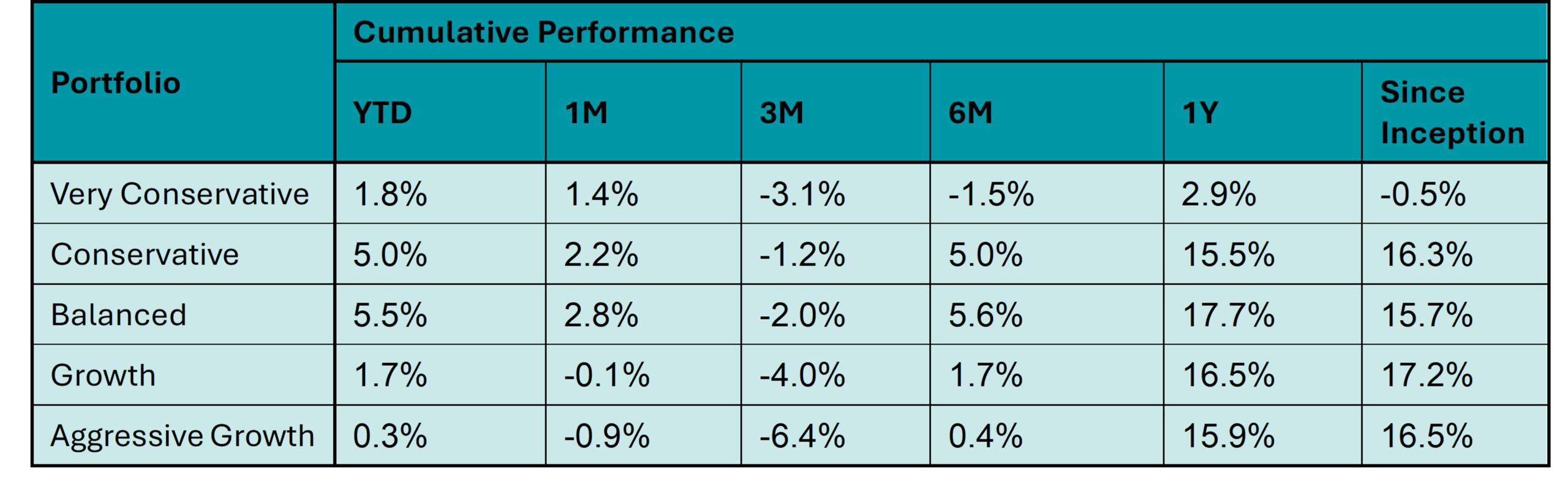
Table 1: KDI Invest Portfolio Performance (as of 31 May 2026).
The provided table offers information on the cumulative performance of selected KDI portfolios since their launch on February 15, 2022. The portfolio returns (in USD) range from -0.5% to 17.2%. In 2026, the portfolios recorded returns within a range of 0.3% to 5.5%.
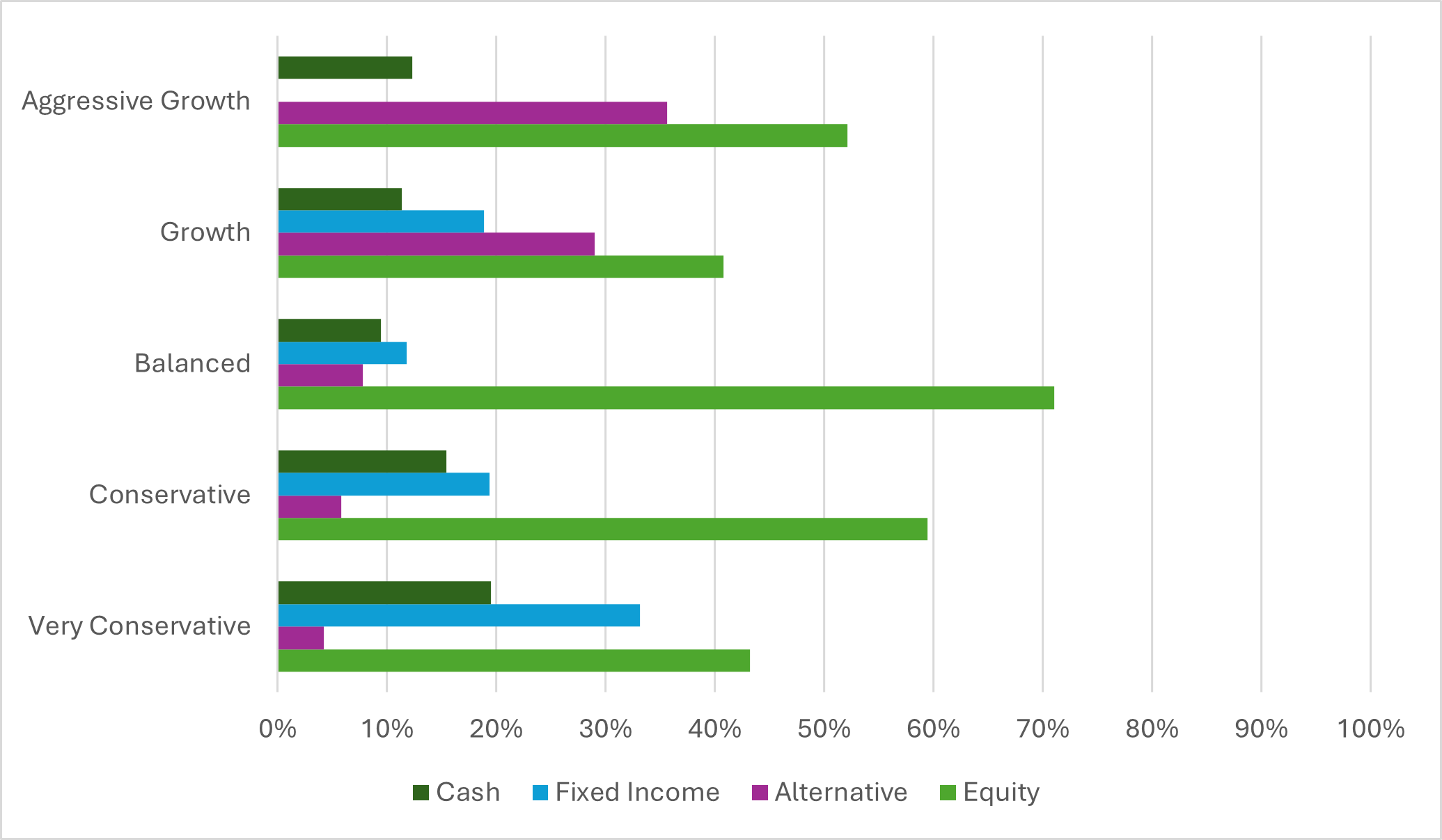
Chart 2: Asset Class Exposure (as at 31 May 2026).
In May, our portfolio pivoted out of fixed income and into US equities, and to a lesser extent commodities. We are now fully aligned with the market’s current momentum and well positioned to capture the upside moving forward. Prior to this our model prioritized capital preservation by reallocating assets into bonds to hedge against uncertainty at the onset of the US-Iran conflict.
Kindly note that the performance and asset class exposure illustrated above are derived from five proxy portfolios. The actual performance and exposure of your investment portfolio may differ due to the customisation made by our proprietary algorithms that tailors the investment to your unique risk profile, as well as the timing of market entry.
Market
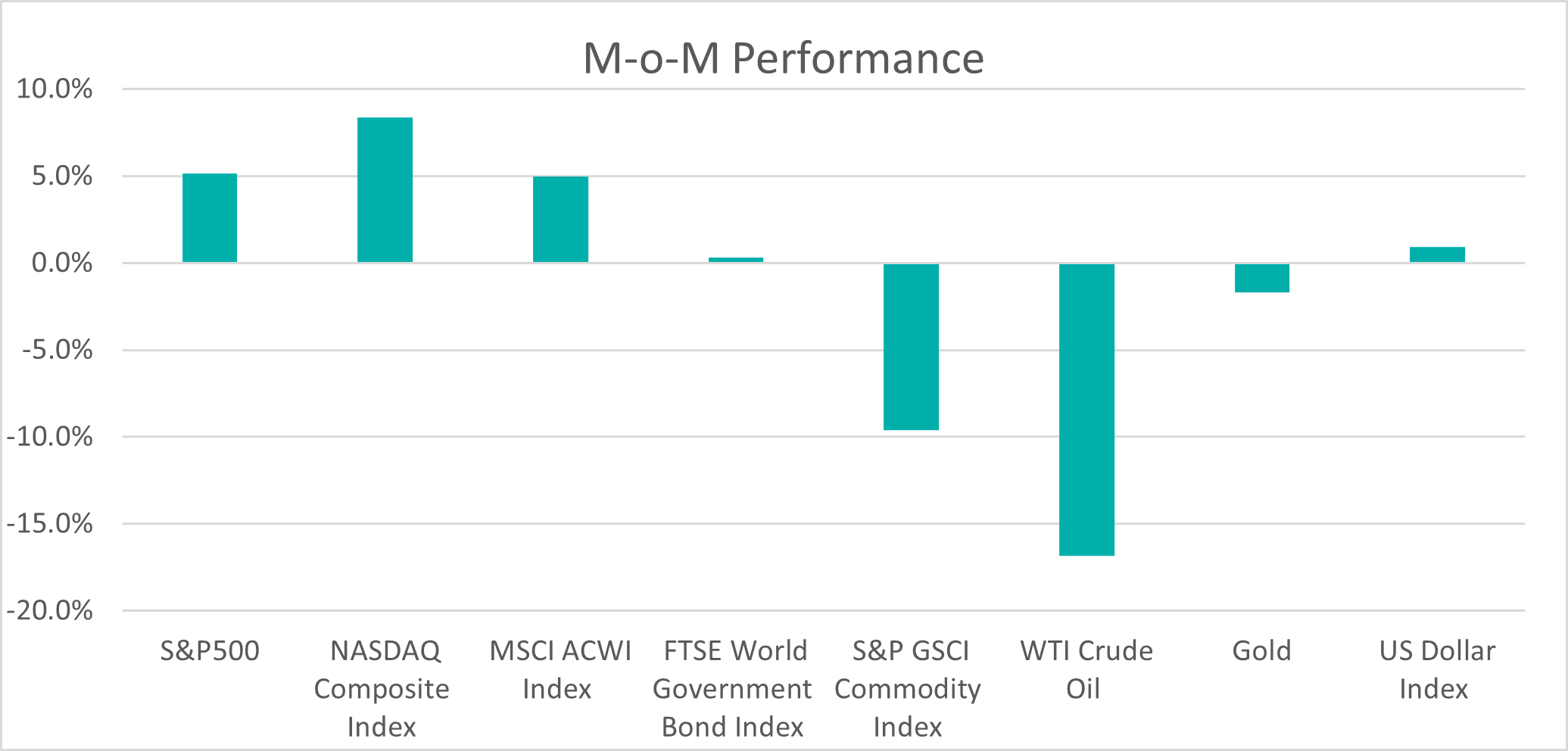
Chart 1: Index Performance in May 2026.
US equity markets delivered strong performance in May 2026, extending the positive return streak of the S&P 500 to eight consecutive weeks, marking the longest weekly winning stretch since 2023. Global markets also rallied, led by a tech- and AI-driven surge in the emerging markets, while Europe lagged and bonds delivered modest, rate-constrained gains.
The 10-year Treasury yield rose modestly to 4.44% from 4.37% in April as hotter inflation, oil-driven risks, and a shift to “higher-for-longer” Fed expectations forced a repricing of long-term rates. CME FedWatch data indicated only a 0.41% chance of 25bps rate cut at the US Federal Reserve’s (‘Fed’) upcoming 17 June 2026 meeting.
Gold inched slightly higher in May 2026, supported by safe-haven and inflation demand. Oil price fell sharply because improving US–Iran ceasefire prospects led markets to price in future supply recovery despite ongoing disruptions. Bitcoin moderated to $74,032 priced tighter liquidity and risk-off conditions.
The US dollar weakened against the Malaysian Ringgit, ending May-2026 at 3.9645, from 3.9717 in end-Apr 2026. In 2026, the Malaysian ringgit appreciated by 2.4% against the U.S. dollar.
Outlook
US inflation surprised to the upside, with recent data showing hotter than expected CPI prints (~3.8% YoY), reinforcing concerns that price pressures remain sticky. At the same time, GDP growth was revised lower to around ~1.6%, signalling some moderation in economic momentum despite overall resilience. The labour market, however, remains relatively stable, with low unemployment and only modest increases in jobless claims, indicating that employment conditions are softening only gradually rather than deteriorating sharply.
At its April 2026 meeting, the Fed kept the policy rate unchanged at 3.50%–3.75%, reinforcing a higher for longer stance as inflation remained sticky. The decision was notable for an unusually high level of dissent (8-4 split), highlighting internal concern that cutting rates too soon could reignite inflation. The arrival of Kevin Warsh added further uncertainty, reinforcing a “higher-for-longer “ and “unclear policy path” environment.
China’s May data showed a softer-than-expected industrial output, driven by headwinds such as the fallout from the US-Iran war. While overall growth moderated, activity remained mixed: high-tech manufacturing and new energy sectors continued to show expansion; in contrast, basic material, property & construction-linked sectors performed the worst. Retail sales grew by 0.2% year-on-year, slowing from 1.7% in March as property slump and geopolitical shock led to subdued spending.
The May 2026 rally was concentrated in a small group of tech/AI stocks, while most sectors and stocks lagged. Tech was the primary driver of the S&P 500’s returns, surging 16%. Conversely, cyclical and rate sensitive sectors underperformed: energy (-5.6%), utilities (-5.1%) and consumer staples (-3.2%) were the worst performing sectors in May.
US trade policy in May 2026 stayed structurally hawkish, with most tariffs intact but a shift toward “managed trade” — selectively reducing tariffs on ~USD30bn of non sensitive goods while keeping strict controls on strategic sectors. In response to legal challenges to its existing tariffs, the administration increasingly leaned on alternative regulatory tools (e.g., export controls, security reviews, administrative frameworks) to bypass legal challenges and sustain its restrictive stance without formally expanding tariffs.
Citation:
https://www.cmegroup.com/markets/interest-rates/cme-fedwatch-tool.html
Disclaimer
Kenanga Digital Investing (“KDI”) is licensed by the Securities Commission of Malaysia as a Digital Investment Management Company. KDI is authorised to carry out the business of fund management blending innovative technology into automated portfolio management services offered to clients under a license issued pursuant to Schedule 2 of the Capital Markets Services Act (CMSA) 2007.
Investment involves risk, including the possible loss of capital you invest. Past performance does not indicate future performance. Historical returns, expected returns, and probability projections are provided for informational and illustrative purposes, and may not reflect actual future performance. KDI does not assume any fiduciary responsibility or any liability for any consequences, financial or otherwise, arising from any transaction in reliance on such information. Investors should rely on their own evaluation or consult an independent financial, accounting, tax, legal or other professional advisers to access the merits and risks before investing.
Any forward-looking statements, predictions, projections or forecast on the economy, stock market, bond market or economic trends of the markets contained in this material are subject to the market influences and contingent upon matters outside the control of KDI and therefore may not be realised in the future. No representation is made as to the completeness and adequacy of the information to make an informed decision.
Neither the information, nor any opinion, contained in this article constitutes a promotion, recommendation, solicitation, invitation by KDI or its affiliates to buy or sell any securities, investment schemes or other financial instruments or services, nor shall any security, collective investment scheme, or other financial instruments or services be offered or sold to any person in any jurisdiction in which such offer, solicitation, purchase, or sale would be unlawful under the securities laws of such jurisdiction. This is not intended to be an invitation or offer made to the public to subscribe for any financial product or other transaction.
This information has not been reviewed by the Securities Commission of Malaysia.