
Shock, Repricing and a Fragile Calm
Executive Summary
March was not a month of ordinary market noise, but rather it was a genuine shock to global investors. The outbreak of the U.S.-Iran conflict and the closure of the Strait of Hormuz sent oil prices surging approximately 50% last month, reignited fears of inflation, and triggered one of the sharpest risk-off rotations global markets have seen in years. The S&P 500 posted its worst month since September 2022, falling close to 5% while broader global equities retreated sharply. Against this backdrop, KDI’s portfolios recorded monthly returns ranging from -6.0% to -8.6%, with year-to-date (YTD) returns moving into negative territory, between -0.5% and -2.0%.
We want to speak plainly: March was a hard month, and we acknowledge the performance was uncomfortable. But discomfort is not the same as damage – and it is crucial to distinguish between the two. What March delivered was a repricing event, not a structural breakdown. As geopolitical risks intensified, our portfolios responded systematically. KDI rotated away from risky assets into bonds and commodities to limit downside exposure. This is exactly what a disciplined, rules-based investment process is designed to do. It is the same process that positioned our portfolios for the strong gains in January and February, when YTD performance for the latter ranged from 5.0% to 7.6% across risk profiles.
For long-term investors, the fuller picture matters more than any single month. Across all five risk profiles, one-year returns range from -0.8% to 14.6%, and since inception, the portfolios have returned -3.4% and 13.8%. These reflect the full spectrum of what genuine long-term investing looks like. As we have reiterated in past months, diversification is the architecture that allows portfolios to absorb shocks without abandoning their trajectories.
As for the calm that has begun to emerge, we think it remains fragile. Ceasefire talks between the U.S. and Iran are still underway, and we continue to see oil prices reflect this. The situation remains fluid and warrants close attention. Beyond geopolitics, we are keeping a pulse on the Federal Reserve’s policy path as Chair Powell’s term draws to a close in May; with inflation pressures elevated and rate cuts off the table near-term, the transition to incoming nominee Kevin Warsh adds another layer of complexity. In the East, China’s approval of its 15th Five-Year plan signals a meaningful shift in the world’s second largest economy that will play out over years, not months. The nation adopted a revised GDP target of 4.5% to 5.0% with an explicit pivot towards structural reforms and domestic consumption.
It is worth pausing on something that passed largely unnoticed. On the same day the conflict in Iran began, Berkshire Hathaway released its first annual letter under the new CEO Greg Abel, marking the end of Warren Buffett’s six-decade run at the helm. The letter arrived quietly, buried beneath the war headlines. The message was simple and timeless: The best investment frameworks are not built for the good times. They are built to hold their shape when everything is moving. It reminded shareholders that the role of long-term investing is not to react to every headline, but to be anchored to a set of timeless values; patience, discipline and tuning out short-term noise. This is not a novel idea, but it tends to matter most precisely when markets make it hardest to believe.
March taught global investors a familiar but necessary lesson: markets can reprice faster than narratives can keep up. Shocks, by their nature, cannot be reliably predicted. Our role is to ensure that when the next one arrives, your portfolio is built to absorb it and remain positioned for what comes after. We stand by our commitment to help our clients achieve their long-term aspirations by delivering globally diversified portfolios.
Fund Performance Highlights
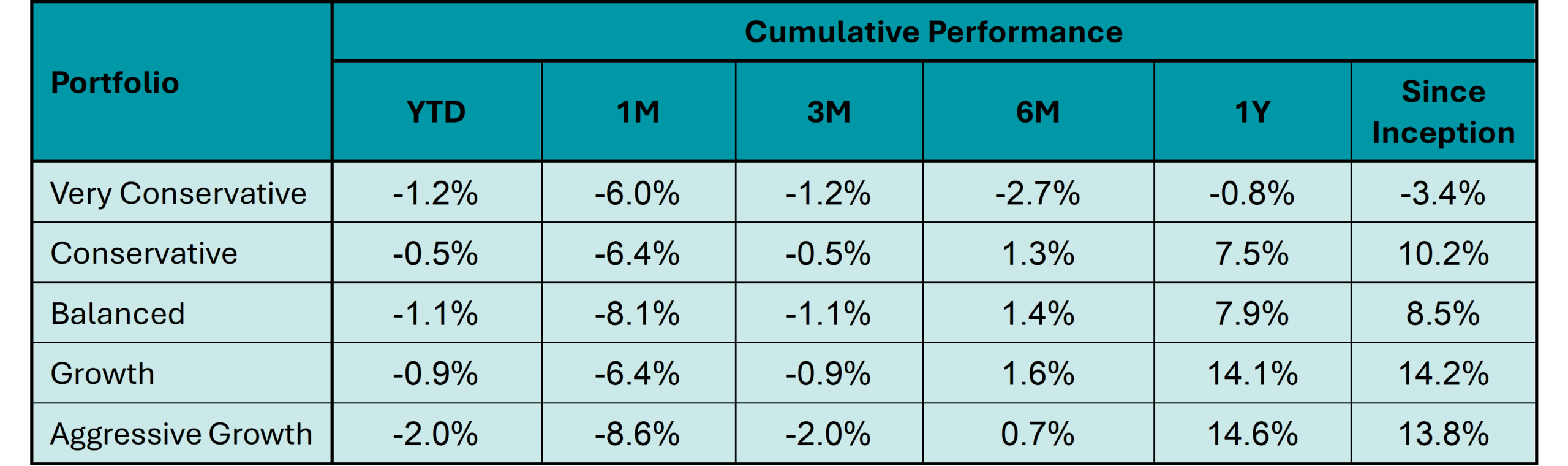
Table 1: KDI Invest Portfolio Performance (as of 31 March 2026).
The provided table offers information on the cumulative performance of selected KDI portfolios since their launch on February 15, 2022. The portfolio returns (in USD) range from -3.4% to 14.2%. In 2026, the portfolios recorded returns within a range of -2.0% to -0.5%.
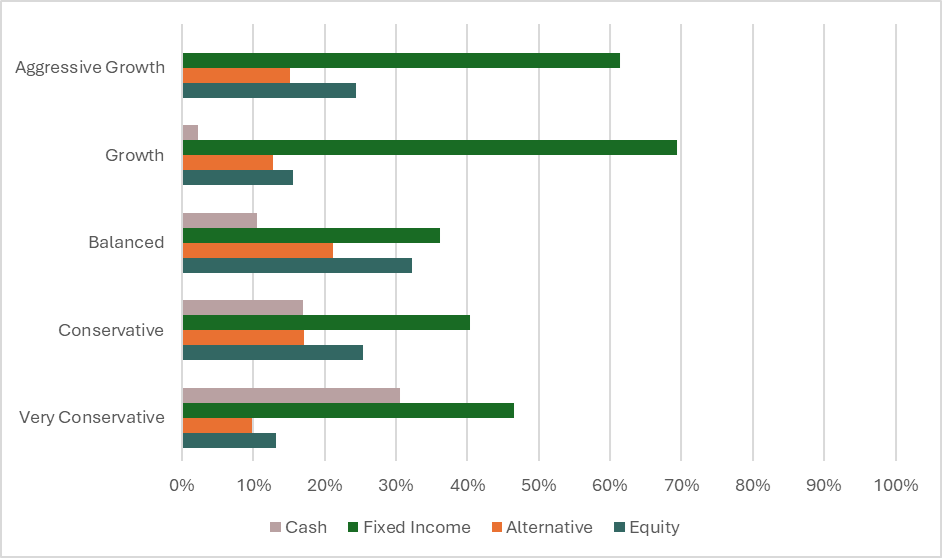
Chart 2: Asset Class Exposure (as at 31 March 2026).
In March, our portfolio rotated away from risk assets into bonds and to a lesser extent commodities, as a defensive response to the conflict in the Middle East. The move was driven by rising geopolitical uncertainty and the need to limit downside risk.
Kindly note that the performance and asset class exposure illustrated above are derived from five proxy portfolios. The actual performance and exposure of your investment portfolio may differ due to the customisation made by our proprietary algorithms that tailors the investment to your unique risk profile, as well as the timing of market entry.
Market
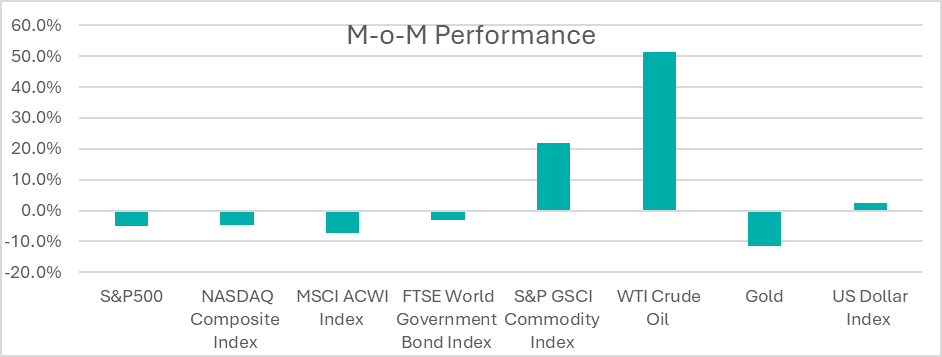
Chart 1: Index Performance in March 2026.
March 2026 ushered in a period of high stock market volatility, erasing gains made earlier in the year. The S&P 500 posted its worst month since September 2022, losing nearly 5% as markets turn risk-off. Despite a March decline, US equities outperformed global markets (-11.13% MoM), supported by the country’s energy self-sufficiency and the strength of the US dollar, and the fact that they had risen less earlier in the year—resulting in more contained pullbacks.
The 10-year Treasury yield rose to 4.32% from 3.94% in Feb as surging oil prices raised concerns over stickier inflation, prompting investors to push back expectations for interest rate cuts. CME FedWatch data indicated a 0% chance of 25bps rate cut at the US Fed’s upcoming 29 Apr 2026 meeting.
Gold fell sharply in March as rising real yields, a stronger US dollar, and profit taking after an extended rally outweighed its safe haven appeal despite elevated geopolitical risks. Oil prices surged by around 50% month on month in March, driven by escalating Middle East tensions. Bitcoin largely moved sideways in March 2026 with prices averaging $69,000.
The US dollar strengthened against the Malaysian Ringgit, ending Mar-2026 at 4.0495, from 3.8925 in end-Feb 2026. In 2026, the Malaysian ringgit appreciated by 0.3% against the U.S. dollar.
Outlook
While the US GDP growth for the third quarter of 2025 was robust at 4.3%, the fourth quarter showed a marked deceleration to 0.7%, reflecting downturns in government spending. The first quarter of 2026 is currently projected to expand at an annual rate of 2.6%, yet this resilience is being challenged by a softening labour market as workers stop quitting and the labour force participation continues to slide. Inflation data was also concerning, as wholesale prices surprised to the upside for a third consecutive month.
The Federal Reserve maintained the target range for the Fed Funds Rate at 3.50%-3.75% in March. Jerome Powell’s administration, nearing its conclusion, has adopted a “wait-and-watch” stance – they’re not ready to cut rates further while energy prices are soaring, but they aren’t ready to hike either because they don’t want to choke off a cooling labour market.
Data released in March 2026 suggests the Chinese economy got off to a promising start in the first two months of the year. Activity in both retail and industrial sectors picked up. Consumer Price Index rose 1.3% year-on-year in February, marking its highest increase in nearly three years. A major development in March was the approval of the 15th Five-Year Plan at the “Two Sessions” political gathering: China lowered its 2026 GDP growth target to 4.5-5% range, from “around 5%”, signalling greater focus on long-term structural reform and domestic consumption over “growth at all costs”.
US sector performances in March were almost exclusively dominated by the energy complex. Energy equities posted strong gains as crude prices surged, while every other major sector finished the month in negative territory.
Following the US Supreme Court’s invalidation of broad IEEPA tariffs, the US implemented a temporary 10% global tariff under Section 122 while pivoting to more targeted enforcement through the Agreement on Reciprocal Trade (ART), which is why the US recently launched probe into Malaysia on alleged excess manufacturing capacity in electronics, machinery and steel sectors in an effort to reinstate tariffs struck down by the Supreme Court.
Citation:
https://www.cmegroup.com/markets/interest-rates/cme-fedwatch-tool.html
Disclaimer
Kenanga Digital Investing (“KDI”) is licensed by the Securities Commission of Malaysia as a Digital Investment Management Company. KDI is authorised to carry out the business of fund management blending innovative technology into automated portfolio management services offered to clients under a license issued pursuant to Schedule 2 of the Capital Markets Services Act (CMSA) 2007.
Investment involves risk, including the possible loss of capital you invest. Past performance does not indicate future performance. Historical returns, expected returns, and probability projections are provided for informational and illustrative purposes, and may not reflect actual future performance. KDI does not assume any fiduciary responsibility or any liability for any consequences, financial or otherwise, arising from any transaction in reliance on such information. Investors should rely on their own evaluation or consult an independent financial, accounting, tax, legal or other professional advisers to access the merits and risks before investing.
Any forward-looking statements, predictions, projections or forecast on the economy, stock market, bond market or economic trends of the markets contained in this material are subject to the market influences and contingent upon matters outside the control of KDI and therefore may not be realised in the future. No representation is made as to the completeness and adequacy of the information to make an informed decision.
Neither the information, nor any opinion, contained in this article constitutes a promotion, recommendation, solicitation, invitation by KDI or its affiliates to buy or sell any securities, investment schemes or other financial instruments or services, nor shall any security, collective investment scheme, or other financial instruments or services be offered or sold to any person in any jurisdiction in which such offer, solicitation, purchase, or sale would be unlawful under the securities laws of such jurisdiction. This is not intended to be an invitation or offer made to the public to subscribe for any financial product or other transaction.
This information has not been reviewed by the Securities Commission of Malaysia.