
Looking Beyond America as International Markets Continue to Deliver
Executive Summary
In February, our portfolios delivered constructive performance, with year-to-date returns ranging from 5.0% to 7.2% across the various risk profiles. Portfolios benefitted from continued strength in international and emerging market equities. The latter extended their overperformance over U.S. equities for a second consecutive month. Gold remained the standout diversifying asset, holding firmly above $5,000 per ounce, while defensive sectors, and consumer staples outperformed. February also saw a landmark ruling from the U.S. Supreme Court, which overturned the administration’s broad tariff powers under the International Emergency Economic Powers Act, easing a significant source of trade policy uncertainty.
Taking a step back, the month of February also offered a live demonstration of what a globally diversified portfolio is designed to do. While U.S. equities retreated, Bitcoin suffered its sharpest correction in months. The lesson is not that U.S. markets are broken, but the dependence on a single market, asset class or narrative introduces fragility that long-term investors cannot afford. In an environment where geopolitical shocks, policy reversals, and AI-driven sector rotation are now constants rather than exceptions, a well-constructed, systematically diversified portfolio is no longer an alternative. KDI will continue to apply discipline in our allocation approach, and continue to believe that patient, diversified investing is the most reliable path through uncertainty.
Fund Performance Highlights
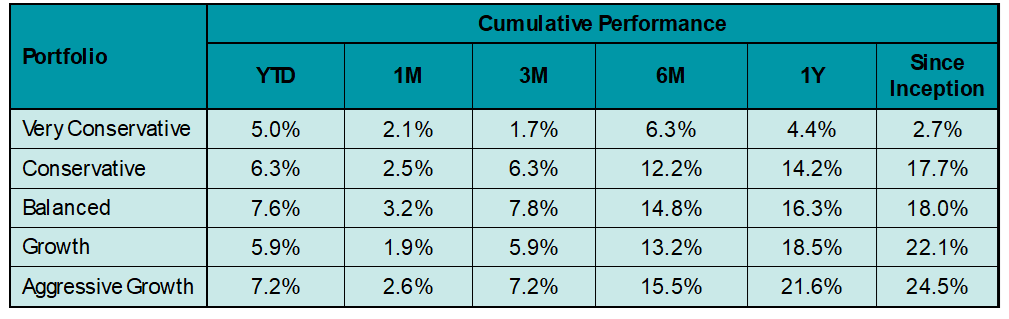
Table 1: KDI Invest Portfolio Performance (as of 28 February 2026).
The provided table offers information on the cumulative performance of selected KDI portfolios since their launch on February 15, 2022. The portfolio returns (in USD) range from 2.7% to 24.5%. In 2026, the portfolios recorded returns within a range of 5.0% to 7.6%.
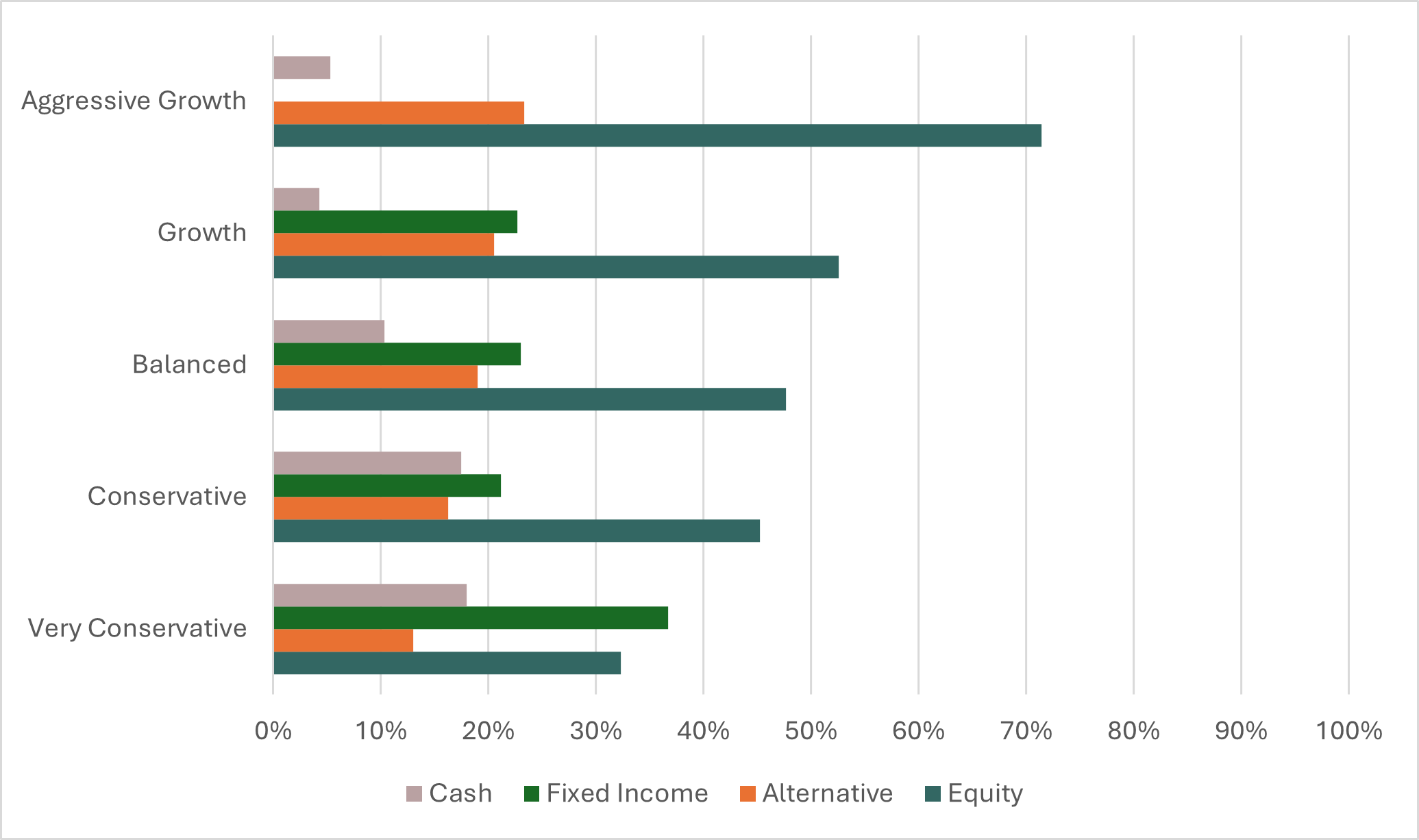
Chart 1: Asset Class Exposure (as at 28 February 2026).
In February, our portfolios added to our gold position, further recognising its proven role as a defensive and diversifying asset. The addition typically performs well during market volatility and uncertainty. Our model also further raised allocation to emerging market equities, partly influenced by its strong performance year-to-date.
Kindly note that the performance and asset class exposure illustrated above are derived from five proxy portfolios. The actual performance and exposure of your investment portfolio may differ due to the customisation made by our proprietary algorithms that tailors the investment to your unique risk profile, as well as the timing of market entry.
Market
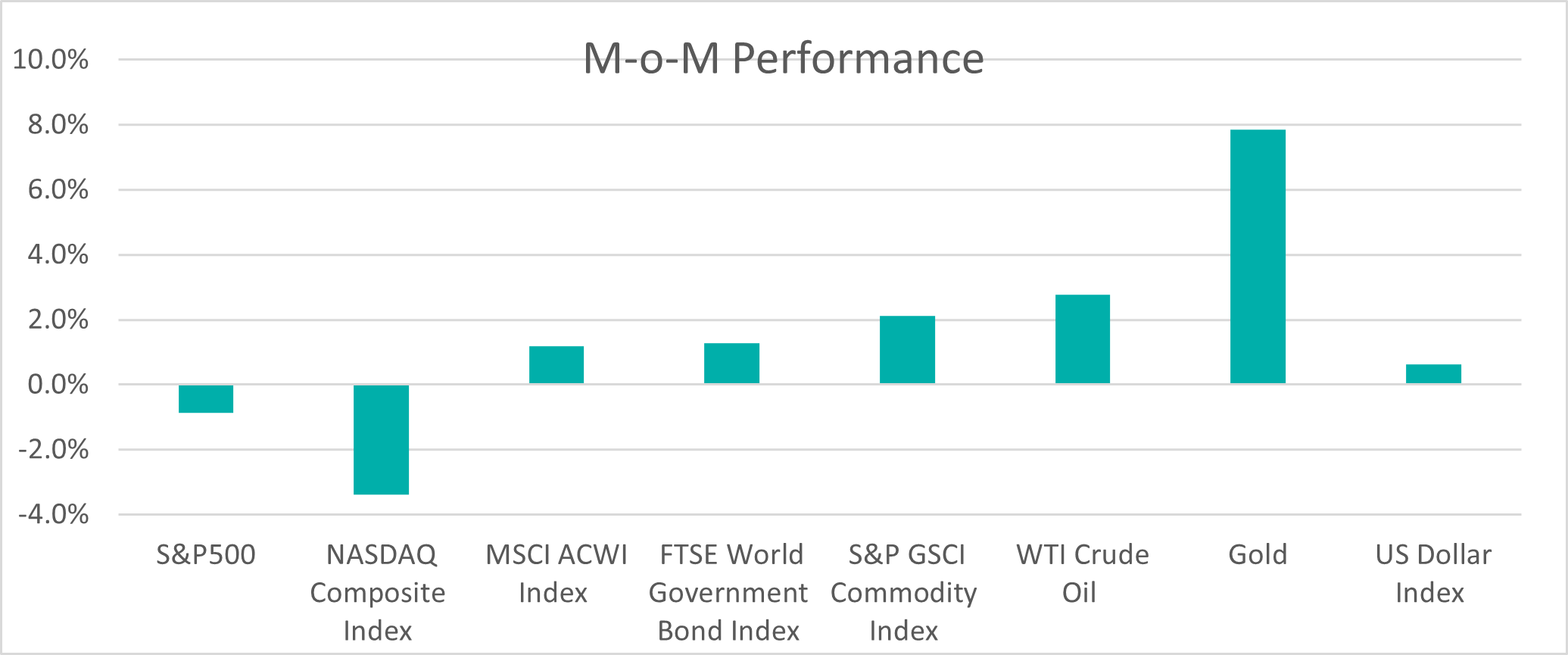
Chart 2: Index Performance in February 2026.
US equities recorded a decline in February 2026, with S&P500 down by 0.9% vs. MSCI All-Country World Index ex-US rising by 4.9% for the month, extending the leadership of international equities. This continued a trend where Asia and emerging markets outperformed, while U.S. returns were muted due to concentrated tech weakness.
The 10-year Treasury yield dipped to 3.94% from 4.24% in January. However, the geopolitical escalation caused a sharp reversal back to around 4.2%. Markets now expect the Fed to remain in a “wait-and-watch” mode. CME FedWatch data indicated a 7% chance of 25bps rate cut at the US Fed’s upcoming 18 March 2026 meeting.
Gold remained the standout hedge against uncertainty, with prices holding up above $5,000 per ounce. Escalating conflict involving Iran is tightening supply-risk premiums, driving crude oil prices sharply higher on fears of regional disruption. Bitcoin corrected by 21.7% to $65,696 by end-February on macro risk-off conditions.
The US dollar weakened against the Malaysian Ringgit, ending February-2026 at 3.8925, from 3.9453 in end-January 2026. In 2026, the Malaysian ringgit appreciated by 4.1% against the U.S. dollar.
Outlook
Economic indicators released in February revealed a resilient but slowing US economy. The January non-farm payrolls report showed a surprise addition of 130,000 jobs, though full-year 2025 growth was revised sharply downward to its weakest level since the pandemic. Consumption showed signs of cooling as retail sales unexpected stalled in December and fell by 0.2% in January amidst harsh winter weather and a federal government shutdown.
During its January 28 meeting, the US central bank voted to maintain the federal funds rate at its current range of 3.50% to 3.75%. The decision to pause rate adjustments reflected a balancing act between moderating inflation and preserving economic momentum. However, the recent rise in oil prices is complicating this task. Supply shocks such as a jump in energy prices tend to push inflation higher while simultaneously slowing economic activity—outcomes that point policymakers in opposite directions.
China’s economic data released in February underscored a stabilizing but still fragile recovery. Inflation data firmed up in January, suggesting some easing in deflationary pressures. However, the official manufacturing PMI slipped to 49.0 in February as factory output and logistics slowed during an unusually long Lunar New Year holiday. However, February data are unlikely to be representative, as Chinese New Year significantly distorts month‑on‑month and year‑on‑year comparisons.
Sector performance within the S&P 500 followed a defensive pattern during the month. Utilities, materials, and consumer staples ranked among the stronger performers, supported by stable demand and relative resilience during periods of slower economic growth or geopolitical uncertainty. Conversely, consumer discretionary, communication services, and information technology lagged the broader market.
On U.S. trade policy, the Supreme Court overturned President Trump’s tariffs, easing a key drag on trade flows and price pressures. The administration is expected to pivot quickly to alternative statutes to reimpose tariffs under different legal authority, though these tools are more constrained, with tighter procedural limits, narrower coverage, and built-in time restrictions.
Building up from developments in A.I. in January, last month offered a moment of pause worth noting. NVIDA (NVDA) reported another quarter of strong earnings, yet investors remain disappointed. It was a small but telling signal: the bar for AI-adjacent companies is rising, and beating expectations may no longer be enough to justify valuations the sector has commanded. Separately, updates on major A.I. developers on advances in agentic workflows rattled software, legal and payments stocks, as investors began pricing in the disruption risk. This raises questions who absorbs the A.I. disruption along the way.
Months like February are precisely why systematic, rules-based investing matters. Noise in markets are ever-present, and the temptation to react is understandable. But our approach is designed to cut through the noise rather than respond to it. Our model continuously evaluates risk and return signals, allowing us to make deliberate, data-driven adjustments rather than tactical bets on a single event. For our clients, investing long-term requires not predicting what comes next, but to remain invested in a portfolio build to weather what does. Staying the course, with the right portfolios remain the most reliable path forward.
Citation:
https://www.cmegroup.com/markets/interest-rates/cme-fedwatch-tool.html
https://www.cnbc.com/2026/02/26/us-treasury-yields-investors-await-more-economic-data-.html
Disclaimer
Kenanga Digital Investing (“KDI”) is licensed by the Securities Commission of Malaysia as a Digital Investment Management Company. KDI is authorised to carry out the business of fund management blending innovative technology into automated portfolio management services offered to clients under a license issued pursuant to Schedule 2 of the Capital Markets Services Act (CMSA) 2007.
Investment involves risk, including the possible loss of capital you invest. Past performance does not indicate future performance. Historical returns, expected returns, and probability projections are provided for informational and illustrative purposes, and may not reflect actual future performance. KDI does not assume any fiduciary responsibility or any liability for any consequences, financial or otherwise, arising from any transaction in reliance on such information. Investors should rely on their own evaluation or consult an independent financial, accounting, tax, legal or other professional advisers to access the merits and risks before investing.
Any forward-looking statements, predictions, projections or forecast on the economy, stock market, bond market or economic trends of the markets contained in this material are subject to the market influences and contingent upon matters outside the control of KDI and therefore may not be realised in the future. No representation is made as to the completeness and adequacy of the information to make an informed decision.
Neither the information, nor any opinion, contained in this article constitutes a promotion, recommendation, solicitation, invitation by KDI or its affiliates to buy or sell any securities, investment schemes or other financial instruments or services, nor shall any security, collective investment scheme, or other financial instruments or services be offered or sold to any person in any jurisdiction in which such offer, solicitation, purchase, or sale would be unlawful under the securities laws of such jurisdiction. This is not intended to be an invitation or offer made to the public to subscribe for any financial product or other transaction.
This information has not been reviewed by the Securities Commission of Malaysia.