A Hike That Puts Diversification to the Test

Executive Summary
Our portfolios delivered mixed results in September 2026, with growth portfolios holding steady, while more conservative portfolios declined as bond markets sold off. With bonds still unsettled ahead of the Fed’s late-October meeting, our models are staying vigilant for upcoming developments, while preserving a wide asset mix across risk profiles. In last month’s edition, we wrote that a well-diversified portfolio should be able to take either Fed outcome in stride. To no surprise, September put that to the test. The Federal Reserve raised interest rates for the first time since 2023, and borrowing cost for the U.S. government climbed near twenty-year highs, pushing bond prices down. Our portfolios that held more equities held their ground, and the most aggressive finished the month slightly higher. Portfolios with higher proportions of bonds had a harder September.
In September, our most conservative portfolio fell 2.1%, while Conservative and Balanced portfolios each lost 1.8%. The Growth portfolio slipped to -0.1% while the most aggressive portfolio gained 0.2%. Since inception, cumulative returns range from -4.1% to 18.1%.
To explain this better, let’s start with the Federal Reserve. The hike itself, on 16th September, was widely expected, and officials signalled another could come before the year-end. Two other things did more damage to bonds; 1) August core inflation came in hotter than forecasted; and 2) oil jumped again after attacks on Saudi energy facilities. By the end of the month, the 10-year Treasury yield stood at 5.29%. Since the relationship between yields and bonds are akin to that of a seesaw, prices fell as yields rose.
Elsewhere, stock indices hid a weaker month. The S&P 500 ended slightly lower, while technology and AI kept the Nasdaq-100 afloat. Gold dropped more than 6%. Bitcoin rose, posting one of its strongest Septembers on record. Two days into October, the jobs report showed U.S. employers added only 29,000 jobs to the roster, and futures traders now expect the Fed to pause this month, with one more hike priced for December. The month of September showcased, once more, that diversification is technically the only ‘free lunch’. As always, we encourage our clients to stay the course by maintaining a long-term perspective while choosing to remain invested in diversified holdings.
Fund Performance Highlights
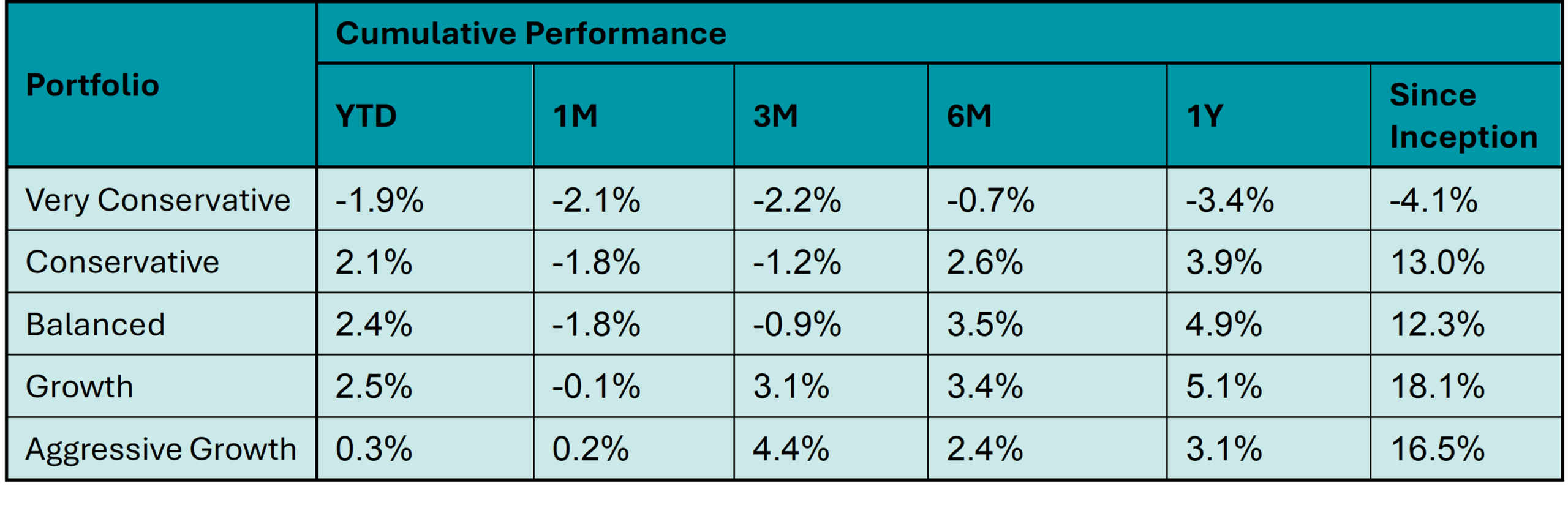
Table 1: KDI Invest Portfolio Performance (as of 30 September 2026).
The provided table offers information on the cumulative performance of selected KDI portfolios since their launch on February 15, 2022. The portfolio returns (in USD) range from -4.1% to 18.1%. In 2026, the portfolios recorded returns within a range of -1.9% to 2.5%.
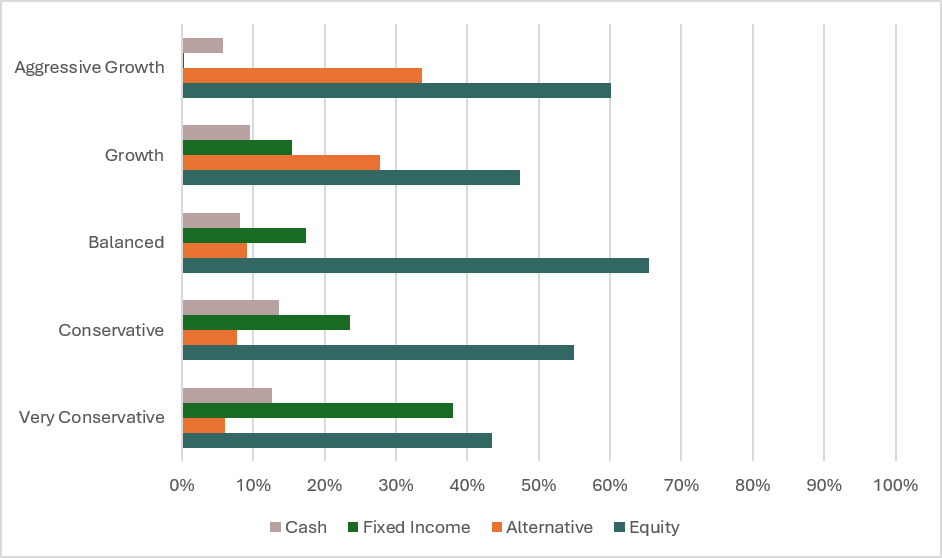
Chart 2: Asset Class Exposure (as at 30 Sept 2026).
In September, our model retained its equity-focused positioning as market momentum remained supportive. The portfolio remained well positioned to participate in continued gains in risk assets while retaining diversification across fixed income, commodities, and cash.
Kindly note that the performance and asset class exposure illustrated above are derived from five proxy portfolios. The actual performance and exposure of your investment portfolio may differ due to the customisation made by our proprietary algorithms that tailors the investment to your unique risk profile, as well as the timing of market entry.
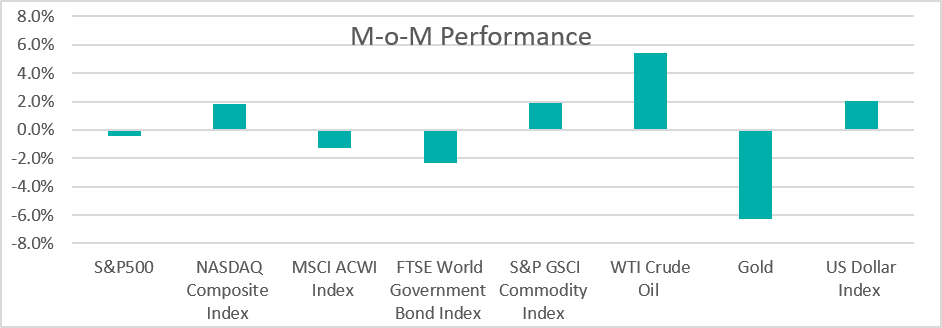
Chart 1: Index Performance in September 2026.
September highlighted an increasingly concentrated U.S. equity market. While the S&P 500 finished the month slightly lower, the Nasdaq-100 advanced more than 3%, supported by continued strength in large-cap technology and AI beneficiaries. Meanwhile, the MSCI All Country World Index (ACWI) declined 1.3% as rising bond yields and growing concerns over economic growth weighed on a broader range of sectors and global markets. This performance gap illustrates how a handful of mega-cap technology companies continued to drive equity returns, masking weaker performance across many sectors and regions.
Both the 2-year and 10-year US Treasury moved higher by 53 – 55 basis points in September, mainly due to the Federal Reserve’s 25 bps rate hike in mid-September. The 10-year Treasury yield rose to 5.29%, its highest level since 2002. As at end-August 2026, CME FedWatch data indicated a 38% chance of 25bps rate hike at the Fed’s upcoming 28 Oct 2026 meeting.
Oil prices extended their gains in September as stalled U.S.-Iran negotiations and slower-than-expected recovery in Gulf production reinforced concerns over global supply availability. Despite elevated geopolitical risk, gold declined in September as rising Treasury yields increased the opportunity cost of holding gold. Cryptocurrencies remained relatively resilient during September, with Bitcoin continuing to attract investor interest despite rising bond yields and weaker performance across many global equity markets.
The US dollar depreciated against the Malaysian Ringgit, ending Sept-2026 at 4.0798, from 4.0247 in end-July 2026. To date in 2026, the Malaysian ringgit depreciated by 0.5% against the U.S. dollar.
Outlook
U.S. inflation continued to moderate, with August core CPI easing to 2.4%, while labour market data pointed to some loss of momentum as nonfarm payrolls increased by just 29,000 in September. At the same time, business activity remained relatively resilient, with the ISM Manufacturing PMI holding at 54.5. Taken together, the data suggest that the U.S. economy remains resilient, although signs of moderation are beginning to emerge.
The Fed raised the federal funds rate by 25 basis points to 3.75%-4.00%, marking the first rate increase since 2023. Beyond the rate hike itself, the Federal Reserve struck a hawkish tone in September, with policymakers signalling that further tightening remained possible and that interest rates were likely to stay elevated for longer. This reinforced concerns over a higher-for-longer rate environment and contributed to the rise in Treasury yields during the month.
Economic data released in September pointed to a gradual improvement in the Chinese economy. August industrial production growth accelerated to 5.2% year-on-year, supported by manufacturing and high-tech industries, while consumer spending remained relatively subdued as retail sales growth slowed. Meanwhile, business sentiment showed signs of recovery, with China’s manufacturing PMI returning to expansion territory at 50.1 in September after several months of weakness, supported by improving production and new orders.
In September, U.S. technology-related sectors continued to outperform, driven by strong investor conviction in the long-term AI investment theme and resilient earnings expectations. Meanwhile, sectors more exposed to interest rates and economic growth, including Financials, Real Estate, Utilities and Materials, came under pressure as Treasury yields rose following the Federal Reserve’s recent rate hike.
U.S. trade policy remained in focus as the U.S. Court of International Trade heard challenges to the administration’s newly implemented Section 301 tariffs. On 30 September, a coalition of 25 Democratic-led states and several small businesses challenged the Trump administration’s new Section 301 tariffs in the U.S. Court of International Trade. Although the tariffs remained in force, the case introduced further uncertainty over the durability of the current U.S. trade framework and the direction of future trade policy.
Most of what lies ahead in the coming weeks comes back to one question: “Will the Fed raise rates again?” September’s U.S. inflation figures, due in mid-October, will go a long way towards answering it, and the Fed meets on 27-28 October. The futures markets currently expect a pause at that meeting and a hike later in December. Company earnings, Malaysia’s Budget 2027 and the U.S. midterm elections in early November might add some noise along the way. Coming back to the Fed, whichever the decision falls, our approach stays the same. Our models shall keep your portfolios diversified, so that no single outcome decides how your investment fares.
Citation:
https://www.cmegroup.com/markets/interest-rates/cme-fedwatch-tool.html
Disclaimer
Kenanga Digital Investing (“KDI”) is licensed by the Securities Commission of Malaysia as a Digital Investment Management Company. KDI is authorised to carry out the business of fund management blending innovative technology into automated portfolio management services offered to clients under a license issued pursuant to Schedule 2 of the Capital Markets Services Act (CMSA) 2007.
Investment involves risk, including the possible loss of capital you invest. Past performance does not indicate future performance. Historical returns, expected returns, and probability projections are provided for informational and illustrative purposes, and may not reflect actual future performance. KDI does not assume any fiduciary responsibility or any liability for any consequences, financial or otherwise, arising from any transaction in reliance on such information. Investors should rely on their own evaluation or consult an independent financial, accounting, tax, legal or other professional advisers to access the merits and risks before investing.
Any forward-looking statements, predictions, projections or forecast on the economy, stock market, bond market or economic trends of the markets contained in this material are subject to the market influences and contingent upon matters outside the control of KDI and therefore may not be realised in the future. No representation is made as to the completeness and adequacy of the information to make an informed decision.
Neither the information, nor any opinion, contained in this article constitutes a promotion, recommendation, solicitation, invitation by KDI or its affiliates to buy or sell any securities, investment schemes or other financial instruments or services, nor shall any security, collective investment scheme, or other financial instruments or services be offered or sold to any person in any jurisdiction in which such offer, solicitation, purchase, or sale would be unlawful under the securities laws of such jurisdiction. This is not intended to be an invitation or offer made to the public to subscribe for any financial product or other transaction.
This information has not been reviewed by the Securities Commission of Malaysia.