
From “When Will They Cut?” to “Will They Hike?”

Executive Summary
Performance was positive across all risk profiles for Aug-26. Markets are closely watching the Fed as to whether rates will be hiked. We expect KDI portfolios to remain diversified to equities and commodities as a risk-management measure. This month would mark a turning point for global investors, where for months the question was when the Federal Reserve would cut rates. With the rate debate, policy shifts and more playing out, our models are keeping a watchful eye on what comes next in the coming months. U.S. equities didn’t flinch, climbing to record highs, and KDI portfolio across risk profiles closed the month in the green, a subtle reminder that staying diversified is what lets you ride out moments like this one.
To see how fast the mood shifted, let’s rewind just a few weeks. Fed Chair Kevin Warsh’s hawkish signals at Jackson Hole sharply lifted the market-implied probability of a September rate hike, and Wall Street split hard on what it meant. Then, days before this edition went out, Fed Governor Christopher Waller signalled the Fed could hold steady if inflation kept improving, and the hike odds slipped back towards roughly 50%. Fed-watching this cycle is proving to be more art than science.
Underneath the Fed drama, the broader data mostly cooperated. July inflation cooled to 3.4% year-on-year, and China’s manufacturing PMI edged up to 49.8, still contracting but improving. Energy and technology led sector gains for the month. Gold caught a bid too, driven more by Middle East safe-haven demand than rate expectations, while Bitcoin’s rally reflected the broader improvement in risk appetite. Trade policy stayed contentious as well, with a coalition of 25 states suing to block the U.S. administration’s latest tariffs, adding one more thread of uncertainty for investors to track into the fourth quarter.
KDI portfolios reflected this resilience, posting positive returns in every risk band for the month, ranging from a 1.2% gain to 3.1% across all risk profiles. Since inception, cumulative returns across the five portfolios range from -2.0% to 18.3%, a reminder that the further out on the risk spectrum an allocation sits, the more it will swing – with markets like September’s – in both directions. Whether the Fed hikes or holds this month, the real lesson is how quickly the prevailing question changed entirely: twice in a matter of weeks. That’s precisely why we build portfolios around a range of outcomes rather than a single forecast. If the question can flip from cuts to hikes in a matter of weeks, the more durable approach is staying diversified enough to take either outcome in stride.
Fund Performance Highlights
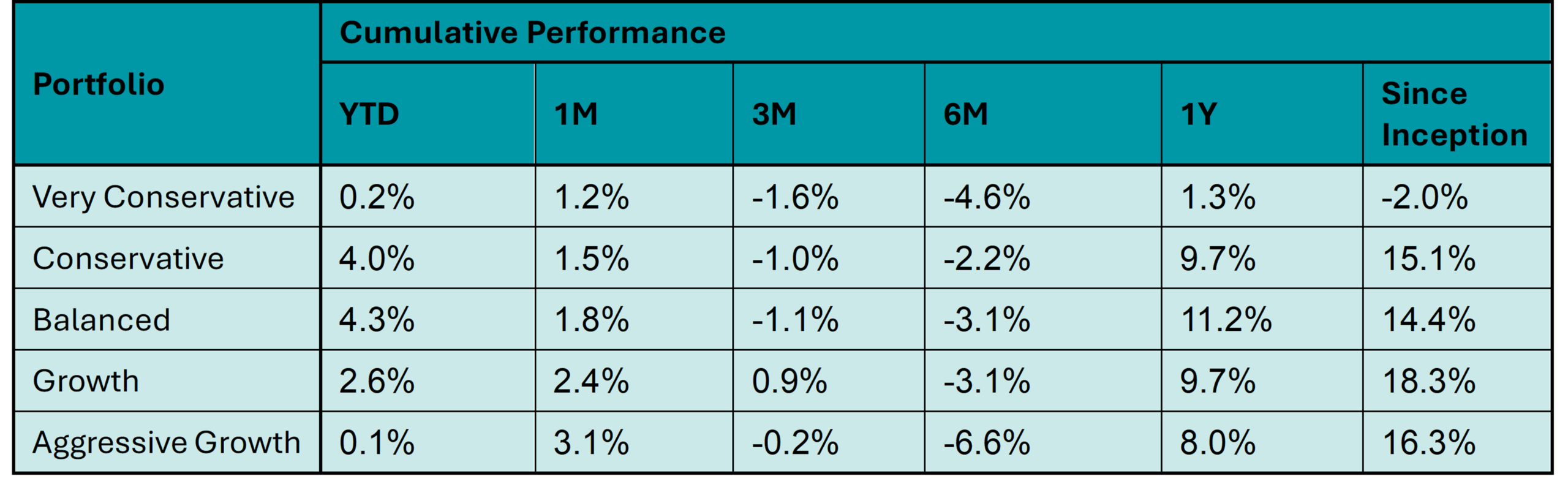
Table 1: KDI Invest Portfolio Performance (as of 31 August 2026).
The provided table offers information on the cumulative performance of selected KDI portfolios since their launch on February 15, 2022. The portfolio returns (in USD) range from -2% to 18.3%. In 2026, the portfolios recorded returns within a range of 0.1% to 4.3%.
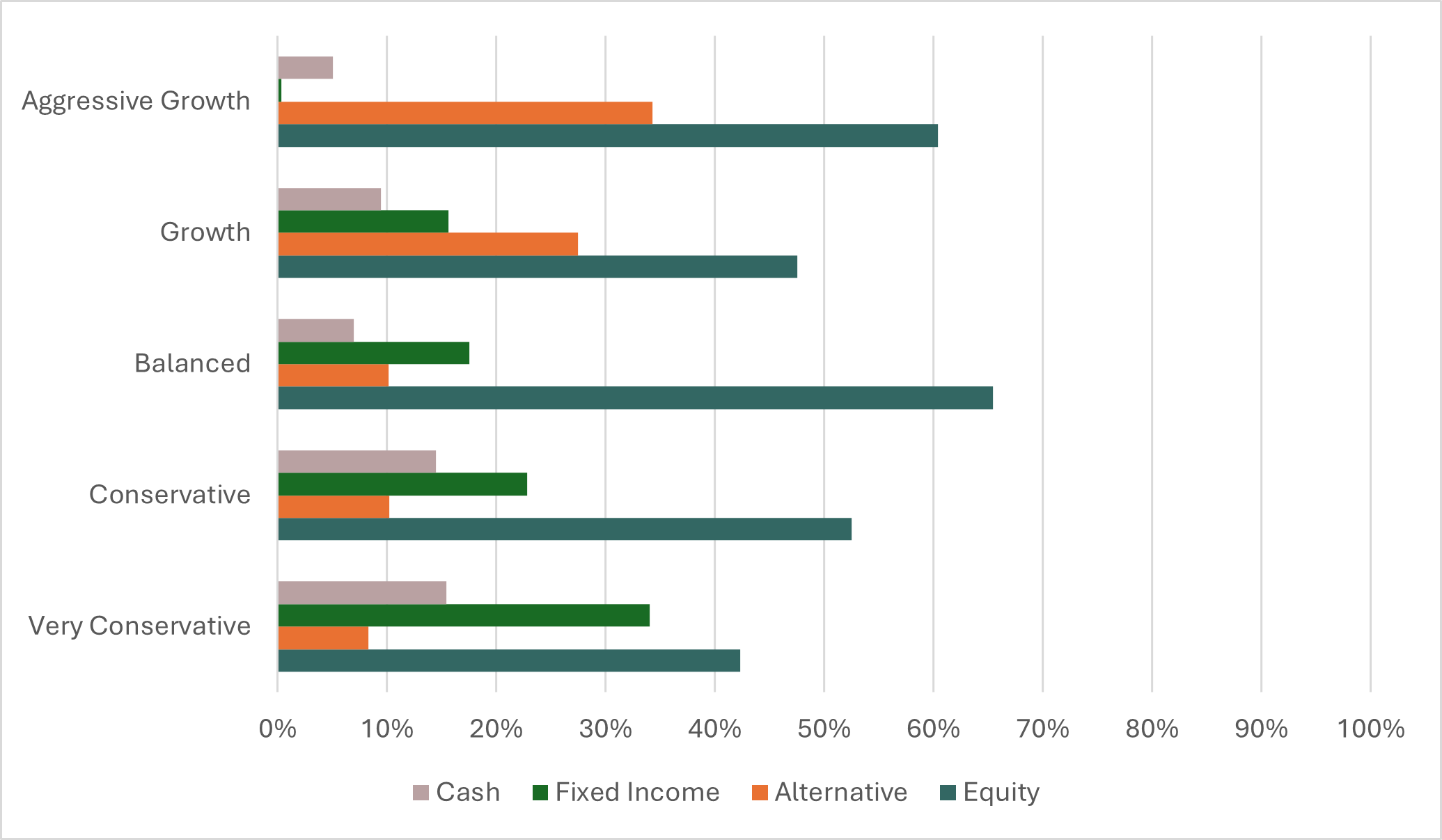
Chart 2: Asset Class Exposure (as at 31 August 2026).
In August, our model increased its equity-focused positioning as market momentum remained supportive. The portfolio remained well positioned to participate in continued gains in risk assets while retaining diversification across fixed income, commodities, and cash.
Kindly note that the performance and asset class exposure illustrated above are derived from five proxy portfolios. The actual performance and exposure of your investment portfolio may differ due to the customisation made by our proprietary algorithms that tailors the investment to your unique risk profile, as well as the timing of market entry.
Market Recap
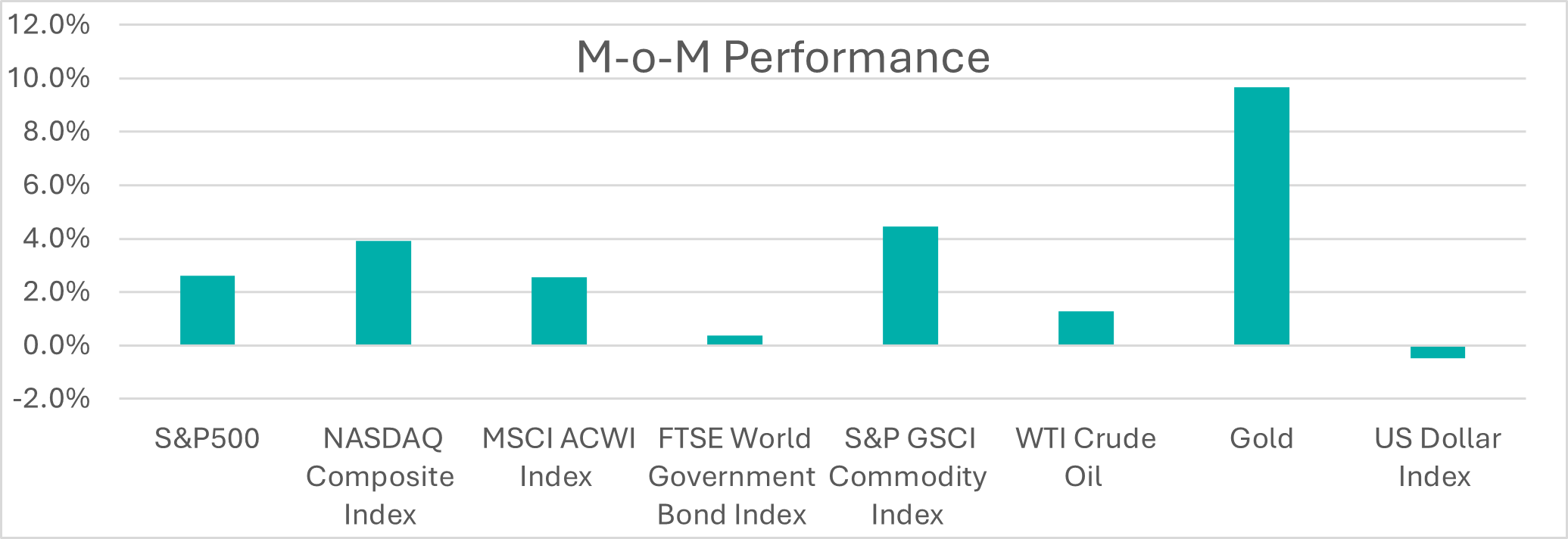
Chart 1: Index Performance in August 2026.
US equities rebounded in Aug 2026 as benign inflation prints eased market concerns about an imminent US Fed rate hike. This, together with strong earnings from AI-related companies, helped propel the S&P500 to fresh record highs during the month. The S&P500 and Nasdaq went up by 2.6% and 3.9% for the month; the US equity rally also supported the MSCI All Country World Index (+2.6%).
Both the 2-year and 10-year US Treasury moved higher by 2 and 5 basis points respectively in August as a slightly stronger-than-expected inflation print released late in the month pushed Treasury yields higher. As at end-August 2026, CME FedWatch data indicated a 65% chance of 25bps rate hike at the Fed’s upcoming 16 Sept 2026 meeting.
Oil prices remained elevated in August, driven primarily by geopolitical tensions in the Middle East. Gold was one of the strongest performing major asset classes in August as lower hike fears boosted demand for the precious metal. Bitcoin recovered strongly, briefly approaching $80,000 amid improving risk sentiment.
The US dollar depreciated against the Malaysian Ringgit, ending August-2026 at 4.0247, from 4.086 in end-July 2026. In 2026, the Malaysian ringgit appreciated by 0.9% against the U.S. dollar.
Outlook
The inflation data released in August showed US consumer inflation rising just 0.1% month-on-month, bringing annual inflation down to 3.3% – 3.4%. US labour market data softened during August, with July nonfarm payrolls unexpectedly declining and prior months revised lower. While hiring momentum eased, unemployment remained low at 4.1%, suggesting a cooling rather than collapsing labour market. Together with inflation data within expectations, the weaker employment figures helped alleviate concerns of further Federal Reserve tightening.
At its July 2026 meeting, the Fed kept the policy rate unchanged at 3.50%–3.75%. The minutes from the Fed’s July meeting showed policymakers continuing to monitor inflation risks, while Fed Chair Kevin Warsh reiterated that inflation remained above the central bank’s 2% target and that policymakers must remain vigilant. Nevertheless, latest economic data helped alleviate fears of further policy tightening.
China’s economic data remained mixed in August. While July activity indicators pointed to soft domestic demand and continued weakness in the property sector, business sentiment improved towards the end of the month. The official manufacturing PMI rose to 49.8 in August, with production and new orders returning to expansion territory. The government has already accelerated local government spending and infrastructure spending initiatives. Investors expect additional fiscal stimulus and targeted credit support during the second half of 2026 as policymakers seek to stabilize growth.
In August, the energy sector (6.5%) led the market for a second consecutive month, benefiting from elevated oil prices and tight global supply conditions. Information technology (+6.2%) rebounded strongly following robust corporate earnings. Defensive sectors lagged as investors shifted towards growth, cyclical and energy. Utilities recorded the poorest performance (-5.2%), followed by Industrials (-2.7%) and Real Estate (-2%).
Trade policy remained in focus as the US implemented its Section 301 tariff regime on imports from 60 economies including Malaysia, China, Vietnam and Singapore. The tariffs impose additional duties between 10% and 12.5%, and cover majority of US imports by value. The most significant August development was a lawsuit filed by 25 US states challenging the legality of the new tariff framework. Meanwhile the US continued pursuing additional trade restrictions on Brazil and Mexico, suggesting that the current US administration remains committed to aggressive trade policy stance.
Looking ahead, the Fed’s rate decision won’t be fully settled with September’s meeting alone: there are more meetings in October and December, so this debate is likely to run for a while yet. Beyond that, how the ongoing tariff dispute plays out, and whether China rolls out further stimulus, are threads worth watching as we head into the year-end. Neither looks like a major red flag on its own, but together with the rate path, they’ll shape how the next few months would unfold. We expect that our models to remain invested in equities and commodities in the coming month, with risk management and diversification being top of mind.
Citation:
https://www.cmegroup.com/markets/interest-rates/cme-fedwatch-tool.html
Disclaimer
Kenanga Digital Investing (“KDI”) is licensed by the Securities Commission of Malaysia as a Digital Investment Management Company. KDI is authorised to carry out the business of fund management blending innovative technology into automated portfolio management services offered to clients under a license issued pursuant to Schedule 2 of the Capital Markets Services Act (CMSA) 2007.
Investment involves risk, including the possible loss of capital you invest. Past performance does not indicate future performance. Historical returns, expected returns, and probability projections are provided for informational and illustrative purposes, and may not reflect actual future performance. KDI does not assume any fiduciary responsibility or any liability for any consequences, financial or otherwise, arising from any transaction in reliance on such information. Investors should rely on their own evaluation or consult an independent financial, accounting, tax, legal or other professional advisers to access the merits and risks before investing.
Any forward-looking statements, predictions, projections or forecast on the economy, stock market, bond market or economic trends of the markets contained in this material are subject to the market influences and contingent upon matters outside the control of KDI and therefore may not be realised in the future. No representation is made as to the completeness and adequacy of the information to make an informed decision.
Neither the information, nor any opinion, contained in this article constitutes a promotion, recommendation, solicitation, invitation by KDI or its affiliates to buy or sell any securities, investment schemes or other financial instruments or services, nor shall any security, collective investment scheme, or other financial instruments or services be offered or sold to any person in any jurisdiction in which such offer, solicitation, purchase, or sale would be unlawful under the securities laws of such jurisdiction. This is not intended to be an invitation or offer made to the public to subscribe for any financial product or other transaction.
This information has not been reviewed by the Securities Commission of Malaysia.